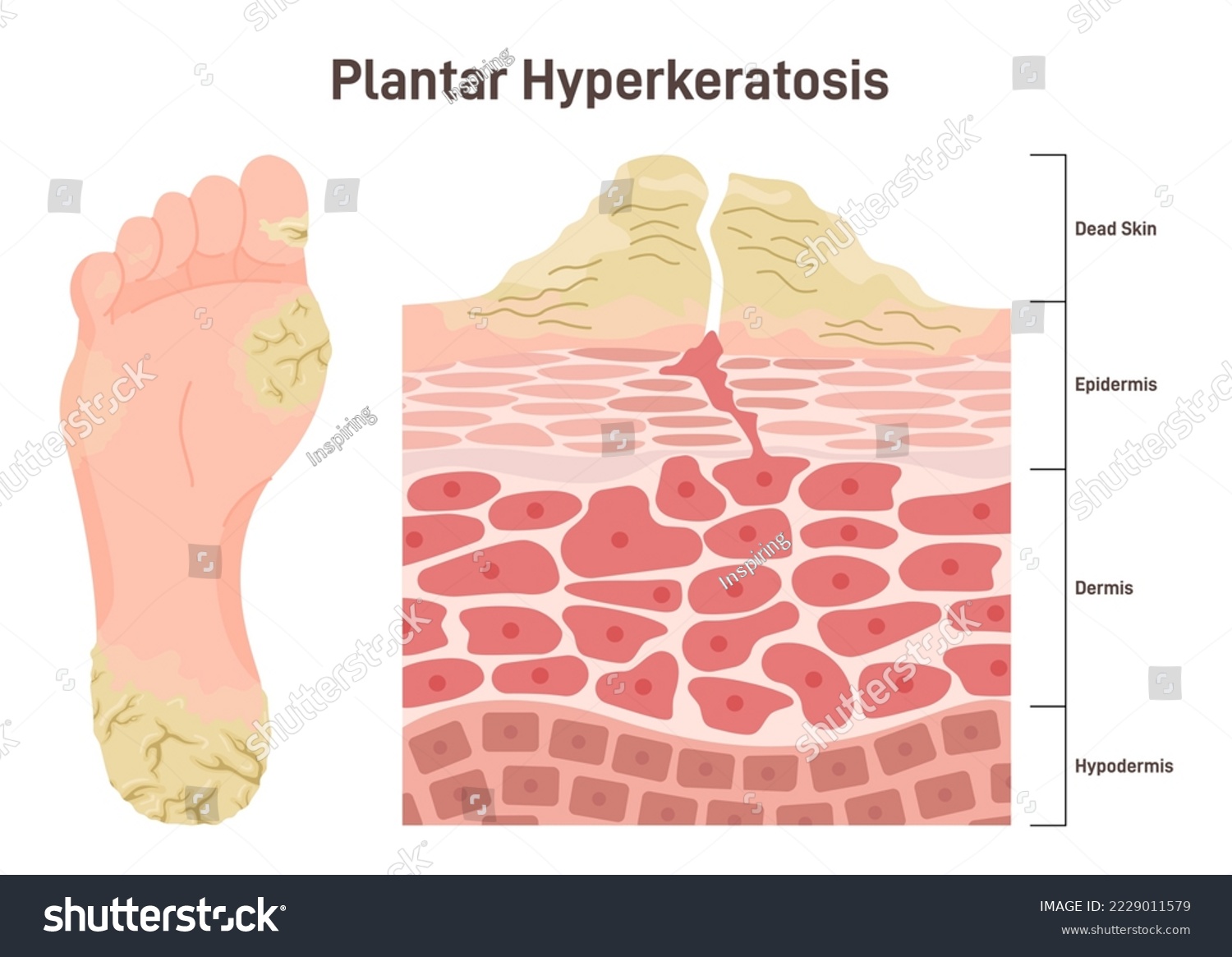
Hyperkeratosis is a condition in which the stratum corneum (the outermost layer of the skin that has keratinized cells) layer of the skin gets thickened. Our skin has broadly three layers. The outermost layer is epidermis. Beneath epidermis lies the dermis layer. And last layer lying below the dermis is known as hypodermis. Homeopathic medicines slow down the production of keratin by keratinocyte cells and help reduce the thickening of skin layers.
The top homeopathic medicines for hyperkeratosis are Petroleum Oleum, Antimonium Crudum, and Graphites Naturalis.
Homeopathic Treatment of Hyperkeratosis
Hyperkeratosis can be well-treated with homeopathy. Homeopathic remedies treat hyperkeratosis in a very mild, safe, and gentle manner. These are selected individually for every case as per the sign and symptom presentation. Some prominently indicated homeopathic medicines for treating hyperkeratosis include Petroleum Oleum, Antimonium Crudum, Graphites Naturalis, Thuja Occidentalis and Arsenic Album. These homeopathic medicines treat hyperkeratosis without any side effects.
Homeopathic Medicines for Hyperkeratosis
Petroleum Oleum – Natural Medicines for Hyperkeratosis with Intensely Thick Skin
Petroleum is an effective homeopathic medicine for hyperkeratosis with intensely thick skin. The skin becomes very hard and rough, and cuts and cracks are often present. These may bleed. Thick crusts on the skin, itching, and burning in the skin lesions are also present. The lesions may be painful and extremely sensitive to touch.
Antimonium Crudum – Effective Medicine for Hyperkeratosis Causing Corns and Callus
Antimonium Crudum is a natural homeopathic medicine used to treat hyperkeratosis where there is a formation of corns and callus. The parts most affected are the soles and palms. There is a formation of thick and hard spots on the affected area. In some cases, horny growths may also be present. It is the excessive pressure on palms and soles that cause the corns and calluses. The corns may be very tender to touch. Inflamed corns are also treated well with this remedy.
Graphites Naturalis – Effective Homeopathic Treatment for Hyperkeratosis in Eczema
Graphites Naturalis is a natural homeopathic remedy for hyperkeratosis in cases of eczema. The main indicating features that point towards the use of this remedy are eczematous patches that are harsh, thick and rough. Extreme dryness and hardness of the affected skin area may also be present. Cracks in the skin, along with the above features, may also be present.
Thuja Occidentalis – Natural Cure for Hyperkeratosis with Warts
Thuja Occidentalis is considered to be the best homeopathic medicine for hyperkeratosis where there is a formation of warts. It is indicated for warts that may be large, small, seedy or pedunculated, and those that are single or appear in groups or crops. Painful, itchy and bleeding warts are also well-treated with this remedy. Apart from these symptoms, it also works well in cases where there are blackish or brownish discolored spots on the skin.
Arsenic Album – Natural Remedy for Hyperkeratosis in Lichen Planus and Psoriasis
Arsenic Album is an effective homeopathic medicine used to treat hyperkeratosis in cases of lichen planus and psoriasis. The chief indicating features to use this remedy in psoriasis include hyperkeratotic, dry, rough skin patches with scaling on it. In cases of lichen planus, there are purplish, rough skin lesions with scaling. Itching may appear in the skin lesions. Burning may appear from scratching, and the skin may be sensitive to touch.
Cause of Hyperkeratosis
Hyperkeratosis is caused by overproduction of keratin by keratinocytes cell. It usually results from excessive irritation of the skin. The skin irritation is caused by pressure, rubbing, chemicals or sun exposure. In some cases, hyperkeratosis may even arise without any skin irritation. A deficiency of vitamin A is another reason for hyperkeratosis.
The epidermis has further five layers including stratum basale, stratum spinosum, stratum granulosum, stratum lucidum, and stratum corneum. The stratum corneum is the most superficial layer and contains cells known as keratinocytes. These keratinocytes produce keratin which is a tough, protective protein. The thickening of this most superficial skin layer is known as hyperkeratosis.
Signs and Symptoms of Hyperkeratosis
Hyperkeratosis may present itself in various forms. It may appear as corns, calluses, and warts on the skin. Blackish, brownish skin growths may also appear on the skin, and this is known as seborrheic keratosis. Actinic keratosis is another appearance where sandpaper like rough spots, flat, and red appear on the skin surface. Actinic keratosis arises mainly from excessive exposure to ultraviolet radiation of sunlight. Other conditions related to hyperkeratosis include eczema, psoriasis with hyperkeratotic scaly, silvery plaques and lichen planus with purplish blue scaly itchy skin patches or lacy white patches inside the mouth.