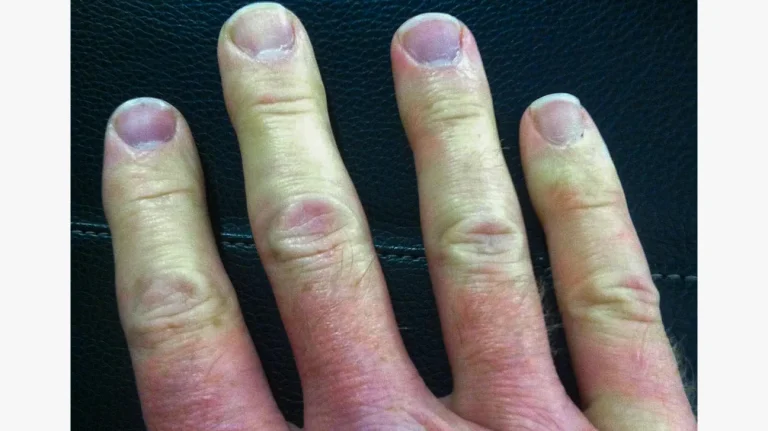
What is Raynaud’s Disease? Raynaud’s disease leads to coldness and numbness of fingers and toes as a result of decreased blood supply to these areas. This response is triggered on exposure to cold temperature and stress. When exposed to cold temperature, the arteries supplying blood to the fingers and toes undergo vasospasm, thus limiting the blood supply. As a result, the fingers and toes turn cold and numb with colour changes, first to pale white and then, blue and red. Classification of Raynaud’s Raynaud’s can be primary or secondary. In primary raynaud’s, there is no underlying medical condition that triggers the vasospasm. Primary raynaud’s is also known as raynaud’s disease. In secondary raynaud’s, an underlying medical condition provokes the vasospasm. Secondary raynaud’s is also known as raynaud’s phenomenon and is more serious than the primary raynaud’s disease. The causes for secondary raynaud’s include connective tissue disorders, scleroderma, lupus, frostbite, atherosclerosis, Buerger’s disease, injuries to hand/feet and smoking. Symptoms of Raynaud’s Disease During an attack of raynaud’s, the fingers and toes turn pale or white with cold and numbness. This is followed by blueness from depleted oxygen supply. Afterwards, when the attack is over, the fingers and toes turn red, hot and may feel throbbing, tingling, pin or needle like sensations. Although it is mainly the toes and fingers that are affected in raynaud’s, it may also affect the ears, lips and nose. Skin ulcers and gangrene are some complications that arise out of raynaud’s. Homeopathic Treatment for Raynaud’s Disease The …